 Attraktive Mengenpreise
 Ihr Fachhändler aus Kevelaer seit 1870
 Versandkostenfrei ab 39 €


-
Bücher
- Belletristik
- Bibeln
- Christliche Autoren
- Geschenkbücher
-
Gotteslob
- Bistum Aachen
- Bistum Augsburg
- Bistum Dresden-Meißen
- Bistum Eichstätt
- Bistum Erfurt
- Bistum Essen
- Bistum Fulda
- Bistum Görlitz
- Bistum Hildesheim
- Bistum Limburg
- Bistum Magdeburg
- Bistum Mainz
- Bistum Münster
- Bistum Osnabrück
- Bistum Paderborn
- Bistum Passau
- Bistum Regensburg
- Bistum Rottenburg-Stuttgart
- Bistum Speyer
- Bistum Trier
- Bistum Würzburg
- Erzbistum Bamberg
- Erzbistum Berlin
- Erzbistum Freiburg
- Erzbistum Hamburg
- Erzbistum Köln
- Erzbistum München und Freising
- Gotteslobhüllen
- Jugendbücher
- Kinderbücher
- Kirchenjahr
- Liederbücher
- Päpste
- Pilgern & Wallfahrt
- Religion
- Sachbücher
- Spirituelle Bücher
- Mehr Details: Bücher
- Devotionalien
- Geschenkanlässe
- Geschenkideen
- Kerzen
- Lebensstil
- Themen
- Magazin
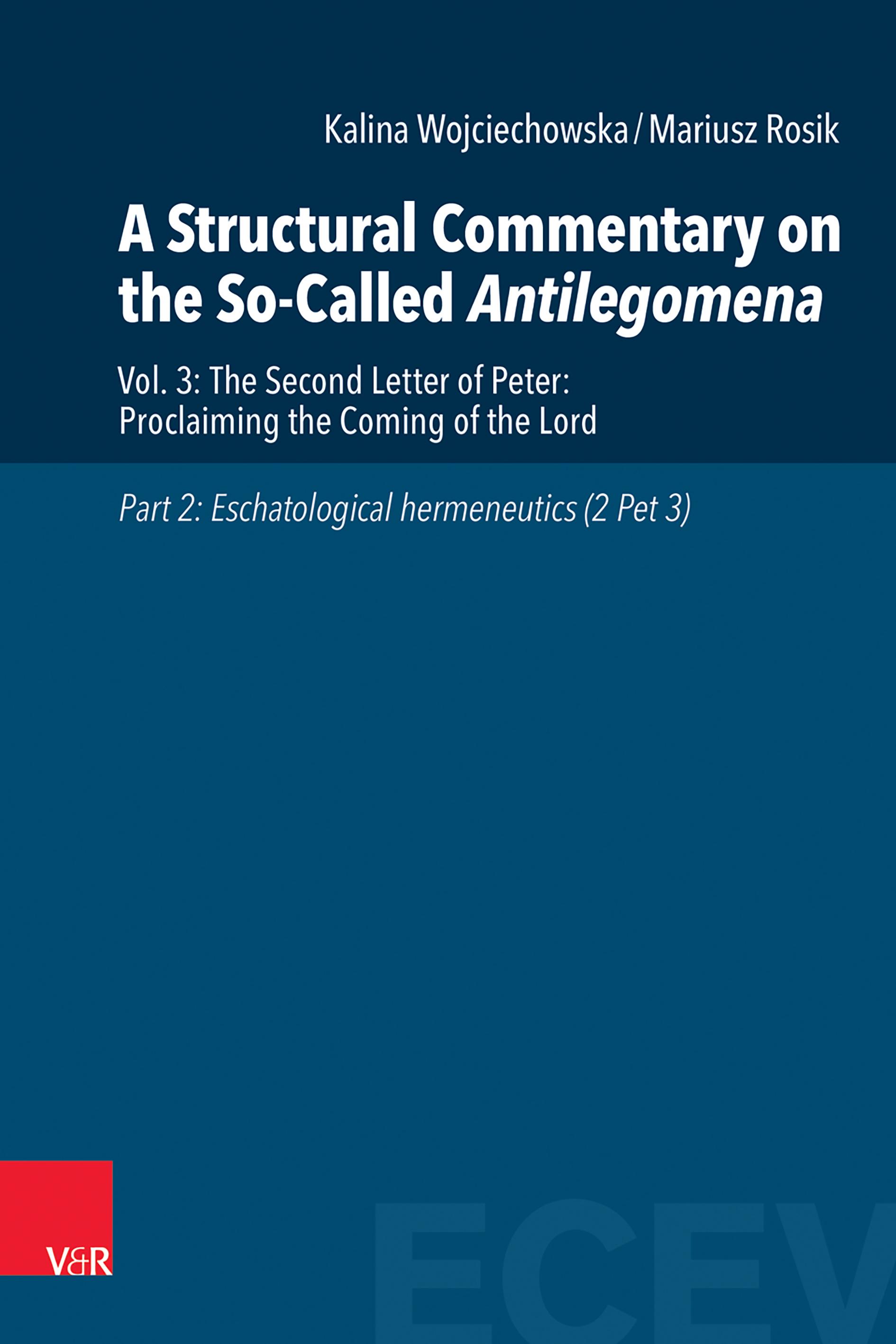
A Structural Commentary on the So-Called Antilegomena
Art.Nr.: 90-8700058774
90,00 €
inkl. 7 % MwSt.
-
 sofort lieferbar
- Gewicht 664,99 kg
👍 Mit Käuferschutz von Trusted Shops.
Sie finden den für das Produkt verantwortlichen Wirtschaftsakteur auf dem jeweiligen Produkt bzw. der Verpackung oder in einer dem Produkt beigefügten Unterlage. Sollten Sie Fragen haben, sprechen Sie uns gerne an.
Wichtige Merkmale
The structural approach facilitates exposure of the elements of eschatological teaching characteristic of 2 Peter's author with its correct or incorrect interpretation.
Wird oft zusammen gekauft
Bewertungen
Produktbeschreibung
The structural approach facilitates exposure of the elements of eschatological teaching characteristic of 2 Peter's author with its correct or incorrect interpretation. Narratives drawn from Jewish tradition aim to show two attitudes towards the announcement of destruction: a positive attitude, signifying salvation, and a negative attitude, signifying annihilation. This pattern is transferred to the attitude towards prophetic and apostolic eschatological teaching. Part 1 of the commentary (2 Pet 1-2) focuses on the misinterpretation of this teaching by false teachers and their followers. Part 2 of the commentary (2 Pet 3) focuses on the proper interpretation of this teaching and on laying out the principles of the letter author's hermeneutics. Peter as a critic of eschatological scepticism and proponent of eschatological hermeneutics
The structural approach facilitates exposure of the elements of eschatological teaching characteristic of 2 Peter's author with its correct or incorrect interpretation. Narratives drawn from Jewish tradition aim to show two attitudes towards the announcement of destruction: a positive attitude, signifying salvation, and a negative attitude, signifying annihilation. This pattern is transferred to the attitude towards prophetic and apostolic eschatological teaching. Part 1 of the commentary (2 Pet 1-2) focuses on the misinterpretation of this teaching by false teachers and their followers. Their eschatological scepticism is ridiculed and their grim fate described. As the starting point for this description and Peter's whole line of argumentation 2 Pet 2:3b is taken - the thesis is that God's inaction is only apparent, while judgment and punishment are inevitable, although only God knows when they will be executed.Part 2 of the commentary (2 Pet 3) focuses on the proper interpretation of this teaching and on laying out the principles of the letter author's hermeneutics. This hermeneutic construes texts from Jewish tradition as foreshadowing and typologies of eschatological events. In explaining the principles of his hermeneutic, the letter's author drew on the creation story, which Jewish apocalypticism read inversely, to mark that the eschatological hermeneutics is rooted in tradition. The starting point of Peter's line of argumentation was taken to be 2 Pet 3:5.7 with its thesis of God's creative and destructive word and God's sovereign will regarding the preservation of creation and the appointment of the time of judgement. This thesis explains the apparent lack of divine action, which was also a major concern in Part 1 of the commentary (2 Pet 1-2).
Kalina Wojciechowska, Dr Hab., is Professor in the Department of New Testament Studies and Greek Language of the Christian Theological Academy in Warsaw. Mariusz Rosik is Professor for New Testament Exegesis, Biblical Environment and Jewish History at the Pontifical Faculty of Theology in Wroclaw, Poland. Rajmund Pietkiewicz is Professor and Vice-President of the Pontifical Faculty of Theology in Wroclaw. Krzysztof Pilarczyk, Prof. Dr. Hab., was Professor of Judaic and Biblical Sciences and Religious History and Head of the Laboratory of the History of Christian-Jewish Relations at the Institute of Religious Studies of the Jagiellonian University in Krakow.
Klappentext
The structural approach facilitates exposure of the elements of eschatological teaching characteristic of 2 Peter's author with its correct or incorrect interpretation. Narratives drawn from Jewish tradition aim to show two attitudes towards the announcement of destruction: a positive attitude, signifying salvation, and a negative attitude, signifying annihilation. This pattern is transferred to the attitude towards prophetic and apostolic eschatological teaching. Part 1 of the commentary (2 Pet 1-2) focuses on the misinterpretation of this teaching by false teachers and their followers. Their eschatological scepticism is ridiculed and their grim fate described. As the starting point for this description and Peter's whole line of argumentation 2 Pet 2:3b is taken - the thesis is that God's inaction is only apparent, while judgment and punishment are inevitable, although only God knows when they will be executed.Part 2 of the commentary (2 Pet 3) focuses on the proper interpretation of this teaching and on laying out the principles of the letter author's hermeneutics. This hermeneutic construes texts from Jewish tradition as foreshadowing and typologies of eschatological events. In explaining the principles of his hermeneutic, the letter's author drew on the creation story, which Jewish apocalypticism read inversely, to mark that the eschatological hermeneutics is rooted in tradition. The starting point of Peter's line of argumentation was taken to be 2 Pet 3:5.7 with its thesis of God's creative and destructive word and God's sovereign will regarding the preservation of creation and the appointment of the time of judgement. This thesis explains the apparent lack of divine action, which was also a major concern in Part 1 of the commentary (2 Pet 1-2).
The structural approach facilitates exposure of the elements of eschatological teaching characteristic of 2 Peter's author with its correct or incorrect interpretation. Narratives drawn from Jewish tradition aim to show two attitudes towards the announcement of destruction: a positive attitude, signifying salvation, and a negative attitude, signifying annihilation. This pattern is transferred to the attitude towards prophetic and apostolic eschatological teaching. Part 1 of the commentary (2 Pet 1-2) focuses on the misinterpretation of this teaching by false teachers and their followers. Part 2 of the commentary (2 Pet 3) focuses on the proper interpretation of this teaching and on laying out the principles of the letter author's hermeneutics.

Blick ins Buch
Unsere Vorteile

Attraktive Mengenpreise
Profitieren Sie von unseren attraktiven Mengenpreisen. Sollten Sie eine größere Menge bestellen wollen und keinen Mengenpreis finden, sprechen Sie uns gerne an.

Ihr Fachhändler aus Kevelaer
Seit 1870 steht der Name Butzon & Bercker in Kevelaer für religiöse Bücher und christliche Geschenke. Schon seit Generationen ist es uns ein großes Anliegen zufriedene Kunden mit bester Qualität zu begeistern.

Versandkostenfrei
Wir liefern innerhalb Deutschlands ab einem Bestellwert von 39 € versandkostenfrei.